

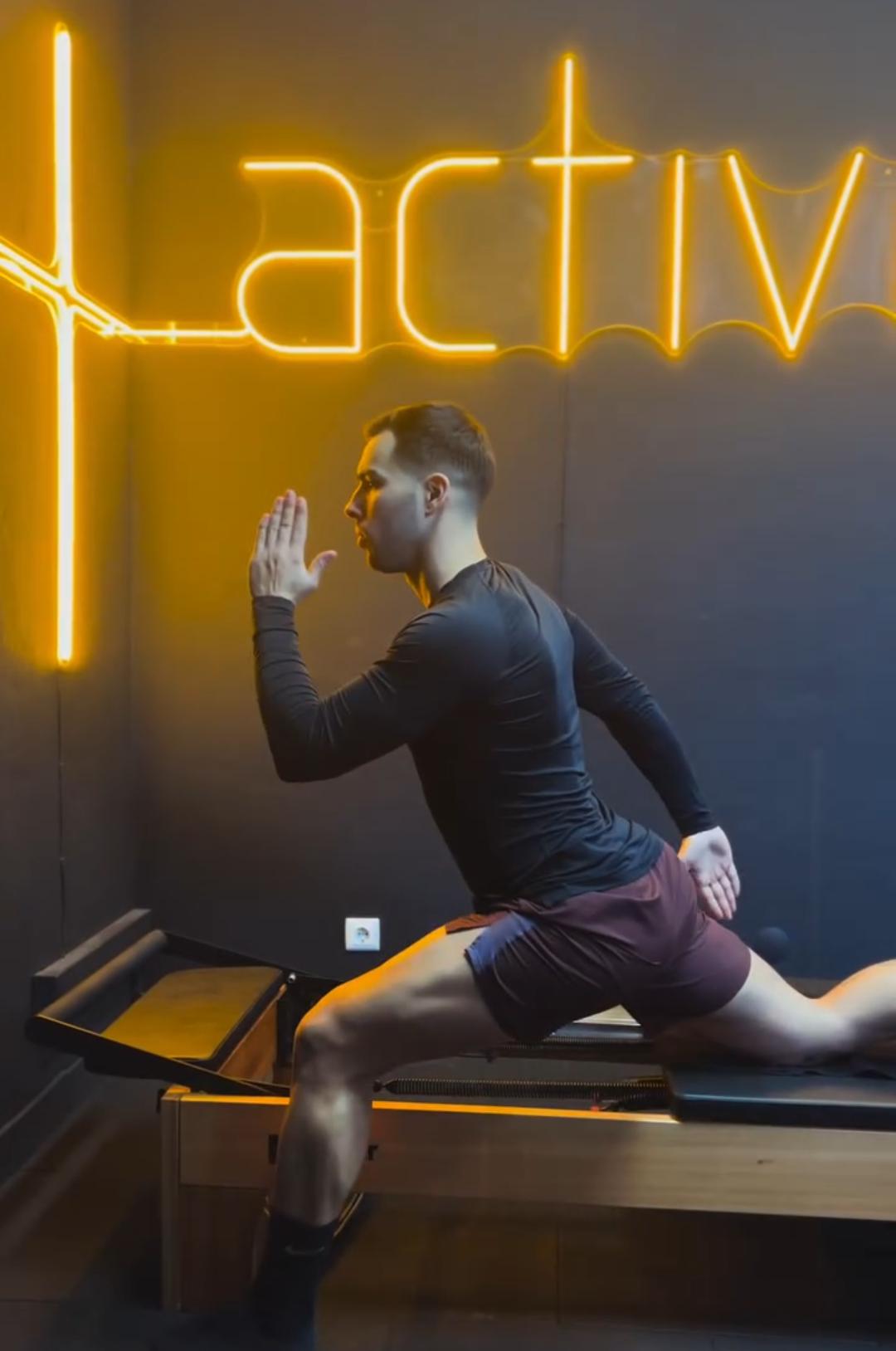
Pilates is one of the most highly valued complementary activities in football training (for both professional and amateur players), as it targets areas that traditional on-pitch training and weight training often fail to emphasise as much. Here are the main proven and widely recognised benefits:
1. Core strengthening
Pilates works the deep muscles of the abdomen, lower back, hips and pelvic floor (the famous “powerhouse”) intensively. This results in:
- Greater core stability
- More power in kicks, jumps, changes of direction and challenges for the ball
- Much more efficient transfer of force between the legs and the torso
2. Injury prevention (one of the key advantages)
It corrects common muscle imbalances in football (such as the quadriceps versus the hamstrings).
Improves stability in the ankles, knees and hips → significantly reduces injuries such as:
- Ankle sprains
- Anterior cruciate ligament injuries (knee)
- Muscle strains (particularly the hamstrings and adductors)
3. Improved flexibility and mobility
Controlled and functional stretching (not static), increasing range of motion without loss of strength.
Particularly beneficial for:
- Hips (high kicks, wide strides)
- Posterior chain (improved sprinting and push-off)
- Spine (less lower back pain after matches)
4. Improved agility, coordination and balance
Improved performance in exercises requiring precise control:
- Sudden changes of direction
- Balancing on one leg
- Fine motor skills → more precise passes and dribbles
Studies show significant improvements in agility tests (e.g. the German Agility Test) and speed dribbling.
5. Improved muscle strength and recovery
It improves your ability to maintain intensity for longer (local endurance).
It aids post-match/post-training recovery as it is low-impact and focuses on breathing and muscle relaxation.
6. Body awareness and posture
The player develops greater proprioception (awareness of the body’s position in space), which improves:
- Positioning on the pitch
- Ball control under pressure
- Faster and more accurate decisions
7. Mental health benefits and rehabilitation
Helps with concentration, breath control and stress reduction.
It is widely used during the post-injury recovery phase, helping to speed up a safe return to the pitch.
To put it simply: Pilates is no substitute for specific football training, but it complements it exceptionally well, making players stronger, more stable, more agile, less prone to injury and more technically proficient.
Many professional clubs (including those in Brazil and Europe) and elite athletes regularly incorporate Pilates into their training regime for these reasons. If you play regularly, 1–2 sessions a week will make a noticeable difference within a few months.
Book an appointment